
Kingston - Private Microsuction Ear Wax Removal In Kingston-upon-Thames KT6 - Everything You Need To Know
This Guide Changed on 2 October 2026 14:41
Just a short walk from Kingston station, the clinic is easy to reach. On-street parking outside the clinic is available on a pay-by-phone basis, and the Kingston ear wax removal clinic is situated on the ground floor within Therapy Spaces on St James' Road.
Ear Wax Removal Kingston South West London Map, Location and Directions
You can get directions to our Microsuction Kingston Location here. Just put in your location in the specified area and Google Maps should lead you to the clinic.
Hearing First Kingston
Located within Therapy Spaces,
URL: https://www.hearingfirst.co.uk/book-ear-wax-removal-near-me/book-microsuction-ear-wax-removal-kingston/
Probably the best ear wax removal clinic in Kingston – don’t just take our word for it – here are some reviews from our many happy clients:
What to Know About Private Microsuction in Kingston-Upon-Thames
Private microsuction ear wax removal in Kingston-upon-Thames offers a prompt, clinician-led way to clear blocked ears without the delays that can sometimes come with routine NHS routes. It is commonly considered for excess wax, compacted cerumen and symptoms such as muffled hearing, a blocked sensation, pressure or tinnitus in one or both ears. Microsuction uses gentle suction under direct vision, allowing the practitioner to see the ear canal and remove wax more precisely than irrigation in many situations. For people living in KT6 and the wider Kingston area, it can be a practical choice when hearing difficulties start affecting work, conversation or everyday routines. This page explains what happens at the appointment, who may benefit, what to expect on the day and how private care compares with other wax removal methods used in the UK.
Who the Service May Suit
Many people look for microsuction after trying home measures, noticing ongoing fullness, or being told that the wax is too hard or too close to the eardrum for standard removal. It is also a common choice for hearing aid users, frequent swimmers and anyone who wants a timely assessment before wax becomes more irritating. A proper ear examination is part of safe care, because ear pain, discharge or a history of perforation can mean a different approach is needed.
How the Clinic Appointment Usually Works
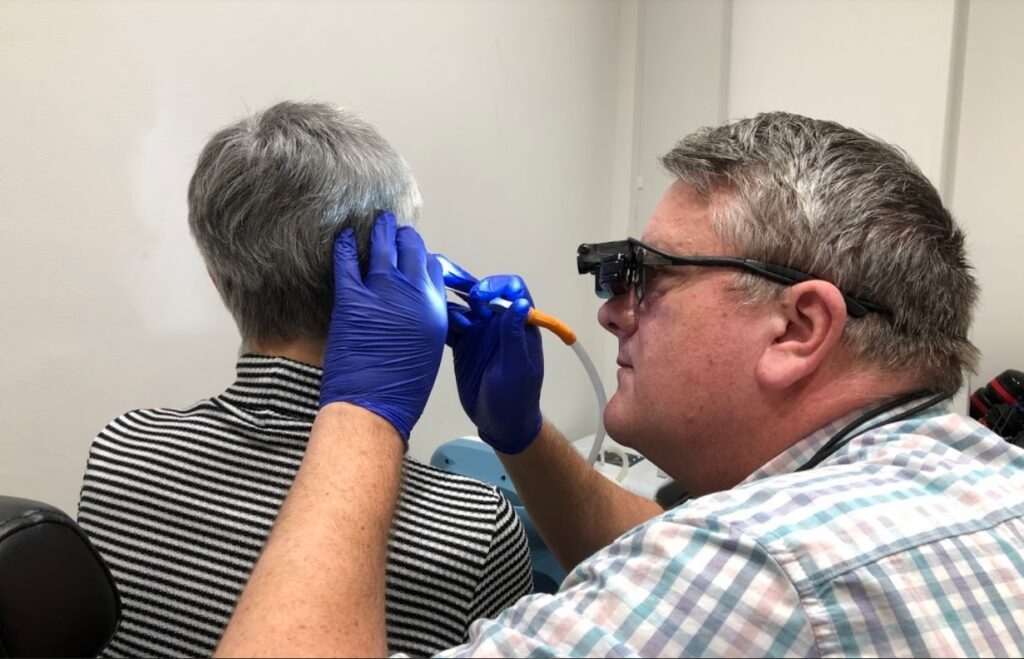
Microsuction is a straightforward clinical procedure that usually starts with an ear examination using a lighted instrument or microscope. The practitioner checks the canal, looks for build-up and confirms whether wax is actually causing the reduced hearing or discomfort. A small suction device is then used to remove wax carefully while the clinician keeps the ear under direct observation. That makes the process controlled and suitable for many adults, including people who cannot tolerate water-based irrigation. The appointment may also include advice if the issue is not wax, or if there are signs of infection, inflammation or another ear condition that should be reviewed by a GP or audiology professional. Most private ear wax removal appointments are intended to be efficient, with the goal of clearing the blockage in one visit where possible.
How Direct-Vision Removal Differs
Because the practitioner can see inside the ear canal, microsuction can often target wax more accurately than blind methods. That can matter when the wax is dry, compacted or close to the eardrum. It also means the clinician can adjust technique if the canal is narrow, tender or partly blocked.
When a Follow-Up Visit Might Be Needed
Sometimes the wax is too hard, too extensive or too uncomfortable to clear fully in one sitting. In those situations, the clinician may suggest softening drops or a return appointment so the removal stays safe and comfortable rather than being rushed.
Microsuction and Ear Syringing Compared
Many people are turning to microsuction not only because of concerns such as tinnitus, but also because ear syringing is generally considered less safe than ear microsuction. Possible side effects of ear syringing or irrigation can include ear infection, perforation of the eardrum and hearing loss. In southwest London, a growing number of local GP surgeries no longer offer ear syringing, and this may be partly due to funding pressures as well as the risk of pushing wax further against the eardrum. It is easy to understand why many people are moving away from walk-in ear syringing in London and looking instead for microsuction ear wax removal. Demand has increased sharply, though NHS microsuction clinics are often unable to keep up, and waiting times can be more than two to three months.
You do not need to wait months for microsuction. Going private can save time, and it may be more affordable than you expect. Simply visit the booking page and you could be dealing with your wax blockage this week.
Fascinating Facts About Kingston
- Coronation Stone Legacy
Kingston-upon-Thames’s ancient Coronation Stone, displayed outside the Guildhall, is where Saxon kings like Æthelstan were crowned in the 10th century. Local legend claims the stone “groans” on the anniversaries of royal deaths—a myth tested during Queen Elizabeth II’s 2022 memorial. - Oldest Surviving Bridge
is one of Britain’s oldest surviving river crossings. Its name comes from the “clattering” hooves of medieval horses, Kingston-upon-Thames’s Clattern Bridge, built in the 12th century, and a 2021 restoration revealed Tudor-era graffiti of a griffin carved into the stone. - Medieval Mint Town
Kingston-upon-Thames was a royal mint under Alfred the Great. In 2020, a metal detectorist found a rare 9th-century silver penny near the Thames, stamped with “CYNINGES TUN”—Old English for “King’s Town.” - Ear Wax Removal in Kingston
Ear wax removal is available from the experts at Hearing First Kingston on Mondays in Therapy Spaces on St James’ Road, just a couple of minutes’ walk from Surbiton station in KT6. Click here to book now. - Ancient Market Rights
Kingston-upon-Thames’s market charter dates to 1242, granted by Henry III. The modern market still thrives near All Saints’ Church, though today’s stalls sell artisan cheese instead of medieval wool. A plaque marks the original tollbooth site. - John Galsworthy’s Hometown
The Nobel Prize-winning author of *The Forsyte Saga* was born in Kingston-upon-Thames in 1867. His childhood home on Coombe Road is now a dentist’s office, but fans still leave typewriter-shaped tributes at his Guildhall statue. - Eadweard Muybridge’s Pioneering Work
The Victorian photographer and motion-study pioneer lived in Kingston-upon-Thames. His 1878 “horse in motion” experiments, which led to film technology, were partly funded by the town council. A mural on Fife Road celebrates his legacy. - The Bentall Centre’s Retail Empire
This shopping hub, opened in 1991, sits on the site of the 1867 Bentalls department store. The original store’s founder, Frank Bentall, introduced Santa’s grotto to Britain here in 1888—a tradition still upheld in Kingston-upon-Thames. - Kingston University’s Artistic Clout
Founded in 1899, Kingston University’s art school trained icons like David Hockney and Fiona Banner. Its Knights Park campus hosts an annual degree show that transforms Kingston-upon-Thames into a hotspot for art scouts. - The “Bored King’s Throne”
Locals jokingly call the Coronation Stone the “bored king’s throne” due to its unassuming appearance. In 2016, a TikTok trend saw Kingston-upon-Thames teens reenacting mock coronations here using Burger King crowns. - Haunted Druid’s Head Pub
Kingston-upon-Thames’s oldest pub (1533) allegedly hosts the ghost of a Roundhead soldier who died playing skittles. Staff report phantom footsteps in the cellar and tankards moving overnight—blamed on the pub’s resident “beer-loving spook.” - Hogsmill River’s Sewage Surprise
In 2018, Kingston-upon-Thames’s Hogsmill River made headlines when fatbergs (sewage blockages) caused “poo geysers” in nearby gardens. The Environment Agency later installed giant “fat traps,” now a quirky talking point on riverside walks. - Kingston Regatta’s Rowdy Past
Founded in 1858, this Thames rowing event once drew 20,000 spectators to Kingston-upon-Thames. A Victorian newspaper dubbed it “a carnival of drunkards,” but today’s family-friendly races focus on cream teas and brass bands. - The Out of Order Phone Boxes
David Mach’s 1989 sculpture of 12 tilted red phone boxes on Old London Road is a Kingston-upon-Thames icon. Locals nicknamed it “The Falling Kiosks” and often pose for photos “holding up” the precarious structures. - The Coronation Stone Heist Attempt
In 1985, thieves tried to steal Kingston-upon-Thames’s Coronation Stone, but abandoned it in a wheelbarrow outside the Guildhall. Police found it with a note: “Too heavy. Fix your security.” The stone was later bolted down with titanium clamps. - Time Capsule Under the Guildhall
a ration book, a letter from the mayor. It’s slated to be opened in 3035—if the building still stands., During 1935 renovations, and workers buried a time capsule under Kingston-upon-Thames’s Guildhall containing a 1934 newspaper - Kingston’s Fake Viking Ship
The “Kingston Viking Longship” displayed at the town museum is a 19th-century replica built to boost tourism. Historians confirmed it’s historically inaccurate, but Kingston-upon-Thames still celebrates it as a symbol of “creative civic pride.” - Secret Pagan Stone Circle
but locals still leave offerings there during solstices—usually flowers, neopagans built a hidden stone circle in Kingston-upon-Thames’s Canbury Gardens. The council removed it, the occasional Greggs sausage roll., In 2002, or crystals - Rose Theatre’s Starry Links
Opened in 2008, Kingston-upon-Thames’s Rose Theatre was championed by Sir Peter Hall. Judi Dench performed here in *A Midsummer Night’s Dream* (2010), and rumor says she still pops into Bentalls for custard creams during rehearsals. - The Bentalls’ Secret Tunnels
Rumors persist of tunnels linking Kingston-upon-Thames’s Bentalls store to the Thames, used to smuggle goods during WWII. Engineers found bricked-up passages in 2001, but the council deemed them “too unstable for urban explorers.”
When Ear Wax Removal Might Be Helpful
Blocked ear wax can lead to a surprisingly wide range of symptoms, and many people only discover the cause after an examination. Common signs include reduced hearing, pressure, itching, crackling sounds or a feeling that the ear is full. Some people notice that their own voice sounds unusual, while others become aware of tinnitus or mild imbalance. Wax can also interfere with hearing aids, making sound less clear or causing feedback. If the ear canal is obstructed, everyday tasks such as phone calls, meetings and watching television can become harder. Microsuction is often considered when these symptoms match visible wax and there are no signs of a more serious ear problem. If you have pain, discharge or sudden hearing loss, a clinical assessment should come first.
- Muffled hearing that builds gradually can often be linked to compacted cerumen rather than permanent hearing loss.
- After a shower or swim, ear fullness may become more obvious if the canal is already partly blocked.
- Repeated attempts to clean the ear, or simple itching, can sometimes make the blockage worse.
- Once wax is removed and the canal is clear, hearing aid feedback may improve.
- Tinnitus can feel more noticeable when wax changes how sound travels through the ear.
Video: What Happens at Your Kingston Ear Wax Removal Appointment
Before, During and After Your Appointment
A private microsuction appointment in Kingston is usually quick and practical, although there are still a few important stages. Before the procedure, the clinician may ask about symptoms, previous ear infections, perforations, surgery or any known sensitivity. They will inspect the ear canal and decide whether microsuction is the right option. During treatment, you may hear the suction device and feel light pressure or brief movement, but the process is generally well tolerated. After wax removal, hearing may improve immediately, although some people notice temporary sensitivity if the canal has been irritated by the blockage. The clinician may also offer guidance on drops, ear hygiene and when to seek further help. A good appointment should leave you with clearer hearing and a better understanding of how to care for your ears.
Simple Ways to Prepare
It helps to avoid putting anything into the ear before the visit, including cotton buds, because they can push wax deeper. If you have used softening drops, mention that at the appointment. Bring any relevant medical information if you have a history of ear surgery, repeated infections or a perforated eardrum.
A Small Detail That Helps
If you wear hearing aids, take them with you so the clinician can see how wax may have affected the fit and sound quality.
Why That Matters
Hearing aid users often notice the greatest benefit when the canal is clear, because occlusion and feedback can reduce as soon as the blockage is removed.
Parking
Car Parks Near Hearing First Kingston Surbiton
- YourParkingSpace, approximately 1.1 miles from Hearing First Kingston Surbiton. View on Google Maps.
- Car Park 1, Kingston Hospital, approximately 0.5 miles from Hearing First Kingston Surbiton. View on Google Maps.
- Norbiton Station Car Park, approximately 0.5 miles from Hearing First Kingston Surbiton. View on Google Maps.
Parking information and place links are provided by Google Maps. Check restrictions and charges locally.
There is on-street pay-by-phone or metered parking in designated bays outside the clinic, and an off-street pay-and-display car park is about a 2 minute walk away.
Parking Near the Kingston Clinic
Planning your visit to the Kingston ear wax removal clinic is easier when you allow a little extra time for parking. Designated on-street bays are available outside the clinic, with payment options that include pay-by-phone and meters. This can be particularly convenient for clients attending a booked microsuction appointment close to Kingston station.
- Check local bay restrictions and parking signs before leaving your vehicle.
- Allow time to walk from your parking space and arrive calmly for your appointment.
- Keep your payment method ready if you are using pay-by-phone parking.
- Start by considering the on-street bays directly outside the clinic.
- If those are full, use the nearby pay-and-display car park, which is around two minutes away on foot.
- Follow the instructions that apply to the space you choose.
Microsuction Versus Ear Syringing and Irrigation
Many people in Kingston consider microsuction because it is a direct-vision method and does not depend on filling the ear canal with water. Ear syringing and irrigation are still used in some settings, but they are not suitable for everyone, especially when there is a history of perforation, infection or ear surgery. Microsuction is often preferred in private clinics because it lets the practitioner monitor the canal closely and stop if the patient feels uncomfortable. Even so, every ear is different, and the best method depends on the state of the wax, the shape of the canal and the person's medical history. A careful assessment should always come first, because safe wax removal is about matching the method to the patient rather than using a one-size-fits-all approach.
Why Some People Prefer Microsuction
Clients often choose microsuction because it can be quicker, cleaner and more controlled than water-based methods. It can be useful when wax is hard, when the ear canal is sensitive, or when previous irrigation has not worked well. It is also reassuring for people who want the clinician to keep constant visual control.
When Irrigation May Not Be Suitable
Water-based techniques are not always appropriate for people with grommets, a perforated eardrum, active infection or certain ear conditions. In those cases, a clinician may suggest another approach or ask for medical review first.
Book Your Microsuction Ear Wax Removal Appointment Today, And Ease the Discomfort Caused by Ear Wax.
Our microsuction ear wax removal clinic in Kingston also serves clients in Kingston-Upon-Thames, Surbiton, Tolworth, Thames Ditton, East Molesey, West Molesey, Hersham, Claygate, Chessington, Hampton Wick, New Malden, Norbiton, Worcester Park, Bushey Park, Teddington, Twickenham, Sunbury-on-Thames, Cobham, Oxshott, Stoke D'Abernon, Stoneleigh, Ewell, Epsom, Leatherhead and Feltham.
Private Ear Wax Removal for Adults, Hearing Aid Users and Busy People
Private ear wax removal can be especially useful for adults who want a flexible service with minimal hassle. If you work long hours, travel across south-west London or need your hearing restored quickly for meetings or family life, a booked appointment can be easier than waiting for a walk-in option. Hearing aid users often benefit too, because wax can affect how well devices sit in the canal and how clearly they amplify sound. Some people book when they need to get ready for an event, a work presentation or a period of travel, and they would rather not keep coping with blocked ears. The appeal of private care is that the appointment is usually arranged in advance, the process is generally straightforward and you know who will be examining your ears. That combination can make the experience feel calmer and more personal than a hurried walk-in service.
- Choose a time when you can arrive unhurried and listen carefully to any aftercare advice.
- Tell the clinic if you wear hearing aids, as this may affect the examination and post-treatment guidance.
- Consider booking sooner if blocked ears are affecting work, sleep or conversation.
- List any previous ear problems, because they help the clinician decide whether microsuction is the right method.
- Plan transport and parking in advance so the appointment begins smoothly and without stress.
Disabled Parking
Disabled clients with a blue badge can park on double yellow lines for up to 3 hours.
Safety, Suitability and When to Get Medical Advice First
Research Catalogue Results for Ear Wax Removal
- The auricular cough reflex: lateralization, prevalence, procedural determinants, and the role of examiner handedness. - van de Loo J, Mayer M, Sharaf K, Eckel H, Jansen L, Klussmann JP, Luers JC., 2026.
- High-definition otoscopic device for humanitarian mission: how i do it. - Lechien JR, Maniaci A, Kipsang MJ, Kibor M, Vaira LA., 2025.
- Use of Castor Oil in Dermatology: A Narrative Review. - Girdler K, Cabatu A, Olds H, Potts GA., 2026.
Source: Europe PMC. These are bibliographic matches, not personalised medical advice or an endorsement of a treatment.
Ear wax removal should always be handled carefully, because a blocked ear is not always caused by wax alone. If you have ear pain, discharge, sudden hearing loss, dizziness, bleeding or a known perforation, you should seek medical advice before booking wax removal. The same applies if you have had ear surgery, active eczema in the canal or repeated infections. A responsible clinician will check these details and may decide that microsuction is appropriate, or that another assessment is needed first. Safety matters because the goal is not only to remove wax, but also to avoid making an existing problem worse. In a private clinic, good practice includes asking about symptoms, reviewing relevant history and stopping if the patient experiences discomfort. That is why a proper consultation is so important, even when the issue appears straightforward.
Safe ear care begins by checking whether wax is really the problem. If the symptoms are unusual, severe or sudden, a clinician or GP should assess the ear before any wax removal is carried out.
A Practical Caution
Do not use cotton buds, hairpins or home suction devices to dig into the canal, because they can push wax deeper and irritate delicate skin.
A Better Habit
If you are prone to wax build-up, ask about preventive advice after treatment so you can reduce the chance of another blockage.
More Information
You can find more details about our Kingston ear wax removal clinic here.
How to Prepare for a Kingston Microsuction Appointment
A little preparation can make your appointment more comfortable and efficient. If you have been advised to use softening drops, follow the instructions given by the clinic or your healthcare professional. Avoid inserting anything into the ear, since that may make the wax harder to remove. It is also sensible to bring a list of medicines or ear-related issues if you have a complex history, especially if you have had a perforated eardrum, grommets or previous surgery. On the day, arrive with enough time to settle in and mention any concerns before the procedure begins. Clear communication helps the clinician choose the right approach and may reduce anxiety. For many people, the appointment is brief, but the quality of the consultation makes a real difference to the result.
- Use softening drops only if they have been recommended or are suitable for your situation.
- Bring spectacles or hearing aids if you need them for everyday listening and communication.
- Avoid swimming immediately before the appointment if your ear feels irritated or sensitive.
- Tell the clinician about vertigo, pain or discharge, as these symptoms may change the plan.
- Arrive a few minutes early so you are not rushed before the examination.
Nearby Clinics
Here are some of our nearby clinics:
- Surbiton: Private Microsuction Ear Wax Removal In Surbiton KT6
- Ealing: Private Microsuction Ear Wax Removal In Ealing W5
Aftercare and What Improvement Can Feel Like
After microsuction, many people notice clearer hearing straight away, although the exact result depends on how much wax was present and whether the ear canal was irritated beforehand. Some mild sensitivity is possible, especially if the wax was hard or packed tightly against the canal wall. The clinician may advise keeping the ear dry for a short period, avoiding further probing and watching for any new symptoms. It is common for people to realise how much the blockage had been affecting conversation, television volume or telephone use once the ear is clear. If hearing does not improve as expected, or if symptoms such as pain or discharge continue, further review may be needed. Good aftercare advice should be simple, specific and easy to follow, so you know when to return to normal routines and when to ask for help.
What Is Normal Afterwards
It is normal to feel a little aware of the ear canal for a short time after treatment. Some people also notice a new sense of openness or a slight echo, which usually settles as they get used to the restored hearing.
When to Contact a Professional
If you develop ongoing pain, dizziness, discharge or no improvement in hearing, arrange a further assessment. These symptoms are not typical aftercare and deserve proper review.
Disabled Access
Published Accessibility Features
- Wheelchair-accessible entrance
- Wheelchair-accessible parking
- Wheelchair-accessible toilet
- Wheelchair-accessible seating
Accessibility details are provided by Google Maps. Contact the location to confirm individual requirements.
The clinic is on the ground floor. There is a small 4 inch step up to the front door, and beyond that there is level access.
Why People in Kingston Choose a Private Clinic
People in Kingston-upon-Thames often choose a private clinic because they want timely treatment, clear communication and a fixed appointment rather than an uncertain wait. That can be especially helpful if wax is affecting work, sleep, hearing aids or social plans. Private microsuction also gives patients the chance to ask questions directly and discuss their ear history in more detail. For some, the reassurance of seeing a clinician who examines the ear before deciding on treatment is the main reason to book. For others, it is simply about convenience and being able to sort out a stubborn blockage without delay. In a busy area like Kingston, a well-run appointment can save time and reduce frustration, while still keeping the focus on safe, appropriate care. The best private services combine efficiency with a proper clinical assessment, not just a quick procedure.
What Good Private Care Should Include
A proper private service should assess suitability, explain the method, answer questions clearly and give sensible aftercare advice. It should not promise that every ear will be cleared in exactly the same way, because professional judgment matters.
Choosing private care is often about speed and certainty, but the clinical standard should remain the same, careful assessment, safe technique and honest advice.
Appointment Booking
Due to high demand, private ear wax removal is by appointment only. You can book an ear microsuction appointment here, or click on the button below:
Book a Private Microsuction Appointment
Private ear wax removal in Kingston is offered by appointment, reflecting the demand for microsuction services. Booking ahead helps you choose a suitable time and gives you a clear plan for addressing a possible wax blockage, rather than relying on a walk-in service. Use the appointment link on the page or the booking button to begin arranging your visit.
- Choose an appointment time that gives you enough time for travel and parking.
- Tell the clinic about any access considerations when booking, if relevant.
- Check the booking details carefully and follow any pre-appointment guidance provided.
If blocked ears are causing discomfort, muffled hearing or a feeling of fullness, arranging an assessment can be a sensible next step. Availability can vary, so booking promptly may help you secure a convenient private microsuction consultation in Kingston-upon-Thames.
Local Travel, Parking and Planning Your Visit
If you are coming to a Kingston ear wax removal appointment from KT6 or nearby areas, planning your journey can make the day feel easier. Local streets may have a mix of pay-by-phone bays, meter parking and nearby car parks, so it is worth checking current restrictions before you set off. If you have limited mobility or need extra time to walk from your vehicle, build that into your plan. Public transport can also be a practical option for many patients, especially if they want to avoid searching for a space. Arriving a little early gives you time to find the building, settle in and complete any necessary paperwork without feeling rushed. Thoughtful travel planning may seem minor, but it often reduces stress and helps the appointment begin smoothly.
- Check local signage carefully, because parking rules can change by time of day or bay type.
- Keep payment methods ready in case the bay uses a mobile app or pay-and-display machine.
- Allow extra time if you are unfamiliar with Kingston centre streets or are travelling at a busy hour.
- Consider accessibility needs before you choose where to park, especially if walking distance matters.
- Use a satnav or map before leaving home, so you know the general route and can avoid delay.